
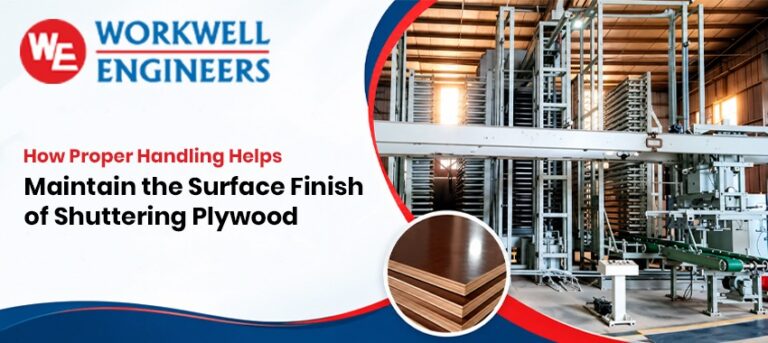
Manufacturing efficiency cannot be determined solely by the machines in production. It includes the movement of raw materials, their processing, and completion. The effectiveness of handling and processing equipment covers all operations performed by manufacturing companies engaged in the production of laminate sheets, shuttering plywood, and PTFE parts.
Modern industrial companies employ the latest systems to help manufacturers execute monotonous tasks and minimize unnecessary manual operations. From the transportation of sheets to the use of special hydraulic presses, the selection of machinery depends on the real manufacturing needs of companies.
- Improving Laminate Production with Efficient Handling Systems
Handling laminate sheets may be challenging due to their size and characteristics of their surfaces. Manual handling may create problems in facilities with high-volume production processes. Uncontrolled movements of sheets result in such defects as scratches, damages at the edges of the sheets, and inaccurate positioning of the sheets.
An efficient Loading Unloading System For Laminates is essential for ensuring smooth transportation between various production stages. Based on the operation method, the system can regulate the loading, unloading and positioning of sheets while eliminating the necessity of extra labor.
A proper Loading Unloading System For Laminates enables manufacturers with frequent orders to promote better material flow. It must be chosen by taking into account dimensions, production capacity, available floor area and characteristics of equipment in use.
Supply operations should not be ignored. Material Handling System For Laminates allows to quickly transport the sheets and avoid downtimes. Depending on the process, the Material Transport System can include conveyors, lifting devices and specialized transfers.
To get familiar with the variety of available solutions for transport of materials, you can look through the Workwell’s Material Handling Systems catalog.
- Creating a More Organized Plywood Handling Process
Shuttering plywood is utilized in construction where the state of the surface, dimensions of sheets and uniformity of the material is important. During production, sheets can be required to pass several processes (manufacturing, finishing, checking quality, stacking), and failure to track their movement may cause delays and even damages.
A dedicated Shuttering Plywood Handling System enables the manufacturers to efficiently control the movement of plywood sheets. Depending on the situation at the production floor, it can help the company to lift, transfer, position, and stack the plywood sheets.
The correct equipment can reduce manual labor and make workflow more stable. When choosing a Shuttering Plywood Handling System, manufacturers should take into account the thickness of the plywood, its weight, frequency of handling, and the space surrounding the machines.
Automation may not mean switching to a completely automated scheme of production. In some plants, the implementation of automating the movement of the sheets along with the application of manual labor will lead to a more practical solution. The main goal is to make the transfer of materials safer and more compatible with the requirements of the manufacturing.
Learn more about the Shuttering Plywood Handling System and how specialized machines can help to improve the plywood production.
- Maintaining Surface Quality During Mirror Finishing
Surface quality has also to be taken into account while producing shuttering plywood. Manufacturers need to make sure that the finish process is accompanied by the careful transportation of the sheets. While the finishing machinery works correctly, careless transportation or stacking can introduce unwanted marks.
In order to make the Mirror Finishing Shuttering Plywood it is necessary to put emphasis on the preparation of the surface, consistency and transportation. Proper finishing requirements depend on product specifications and manufacturing process as well as the equipment used accordingly.
Proper usage may protect the finished surfaces from unnecessary contacts and scratches. Manufacturers must take into account how the sheets are supported during transfer and how the arrangement of stacking may lead to friction and marks on the material.
As far as the manufacturing of Mirror Finishing Shuttering Plywood is concerned, coordinating the finishing device with suitable transportation methods may make the manufacturing process easier. Regular inspections and proper storing are also important.
- Specialized Hydraulic Pressing for PTFE Components
PTFE is widely popular when it comes to industrial applications requiring particular characteristics such as good chemical resistance and low coefficient of friction. Making PTFE components may imply the usage of special conditions, therefore suitable pressing devices are very important here as well.
When selecting a Hydraulic Press For PTFE, factors to consider include the formulation of the material, the dimensions of the component, the production capacity needed, and the processing method to be used. One must analyze pressure levels, the temperature of the product, tooling design and operational cycles before making a decision regarding a machine.
Having a suitable Hydraulic Press For PTFE for the specific purpose gives the opportunity to the producer to avoid dependence on capacities only. Furthermore, the equipment should be correct for the shape of the component, the volume of the production, and the quality demands.
In some situations, the companies need equipment, where tooling or operating conditions are taken into account, which means that special-purpose presses are the right choice, and standard machines would not be effective in this case. Read about special hydraulic press equipment to understand machines designed for specific industrial applications.
- Choosing the Right Equipment for Your Production Facility
Production facilities operate under different conditions. The considerations concerning the volume of production, dimensions of materials, space, labor and already existing machines have to be taken into account when selecting a piece of equipment. Understanding these factors beforehand can help make proper decisions.
A Loading Unloading System For Laminates should be able to operate at an appropriate speed and configuration in order to match with the production line. A compatible Material Handling System For Laminates will allow the throughput to take place seamlessly.
Manufacturers of plywood ought to determine if their Shuttering Plywood Handling System can take in the sizes of the sheets and the stacking that they will be utilizing. Suppliers of Mirror Finishing Shuttering Plywood should also determine how the handling devices can protect the end product from damage.
Likewise, a proper understanding of the materials being utilized and of the manufacturing process is key to selecting a Hydraulic Press For PTFE. By clarifying these aspects with a vendor, an appropriate configuration may be devised.
Building More Efficient Industrial Workflows
Singularly developed industrial equipment allows manufacturers to plan for the material flow and processing in an efficient manner instead of performing each operation in an isolated way. Proper handling systems allow minimizing unwarranted transfers of materials, improving the workflow organization and contributing to the uniformity of production practices.
Workwell Engineers creates solutions in industrial equipment in the areas such as material handling, plywood handling and specialized hydraulic pressing. Through production needs assessment, character of material and factory layout, producers can identify systems that best help them meet their operational objectives.
The most efficient investment is not necessarily the most sophisticated machinery. It is the machine that matches the production process, takes care of practical production tasks and meets any changing operational requirements.