
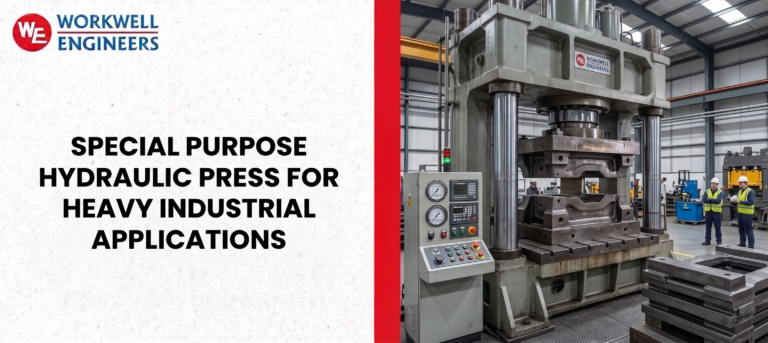
Precision, strength, and efficiency are vital factors in obtaining high standards in production today. The manufacturing sectors that work with PTFE components require machines that can withstand high levels of pressure and produce accurate results; this is when a Hydraulic Press For PTFE is the ideal option for those manufacturers that operate in these demanding conditions.
PTFE is well recognized as having exceptional chemical, heat resistance and low friction properties. It can be found in various industries like automotive, electrical, chemical processing, aerospace and engineering, to name a few. However, processing PTFE materials requires specialized machines that deliver consistent pressure while providing proper dimensional accuracy; this is why a special purpose hydraulic press will fulfill those industrial needs.
What Is a Hydraulic Press For PTFE?
Hydraulic Press For PTFE is considered an industrial machine designed for compressing, molding, shaping or processing PTFE materials by means of hydraulic pressure. These machines are specifically designed to meet the needs of high-load applications requiring precision and control of force.
Hydraulic presses for PTFE will offer different benefits than a conventional press; these presses are designed for specialized industrial application providing a uniform distribution of pressure to ensure the structural integrity and consistent quality of the PTFE material throughout the production cycle.
Some of the applications that utilize hydraulic presses include:
– Molding PTFE
– Compression
– Sheet Forming
– Industrial Sealing Products
– Producing Gaskets
– Manufacturing Bushings and Bearings
– Creating High Performance Parts
When it comes to PTFE parts, it is critical that the manufacturing process be done under precise processing conditions and as such, hydraulic press manufacturers rely on advanced hydraulic press systems to produce consistent output.
Why Hydraulic Presses are Essential in Heavy Industrial Applications
The equipment used in heavy industrial applications is required to function continuously under extremely high pressure levels without sacrificing accuracy. Hydraulic Press for PTFE is one of the most useful tools in an industrial shop because they offer a combination of strength, reliability and high level of precision all in one package.
The major benefits include:
– The ability to hold extreme pressures
– Consistent shapes of materials being molded
– Reduced errors in production
– Higher quality products produced
– More efficient operations
– Longer life of machine
Industrial manufacturers prefer hydraulic press systems because they improve workflow efficiency while maintaining consistent production standards.
How Hydraulic Press for PTFE Can Help Manufacturers Precision
- Even Distribution of Pressure
The use of Hydraulic Press For PTFE offers the advantage of distributing a uniform amount of pressure across the piece being manufactured. It is critical that this uniformity is maintained because an uneven distribution of pressure may make the PTFE part defective.
The nature of hydraulic systems provides a means to apply a controlled amount of force equally to the surface of the material that is being compressed, allowing for a higher level of quality in the end product, along with fewer defects, in an industrial manufacturing process.
Uniformity of pressure is especially important when manufacturing PTFE.
- Heavy-Duty Industrial Work Requires High Strength
In order to manufacture PTFE, large mold sizes, dense material densities and continuous production cycles are often used. A hydraulic press built for industrial applications has the strength necessary for heavy-duty operations.
The machine structure is designed to withstand high-pressure operating conditions while also remaining stable under operational load. Thus, by being stable during the preparation of PTFE materials, manufacturers can process, or create PTFE, without negatively impacting the hydraulic press’s performance.
By also minimizing downtime, a durable hydraulic press for manufacturing PTFE can help support long-term industrial productivity.
- More Accurate Products with Greater Consistency
When manufacturing products with PTFE, it is imperative that the dimensions of the products be achieved precisely, as PTFE is often used as a material for industrial sealing and insulation applications and in engineered applications. Hydraulic press systems help maintain accurate dimensions and consistent product quality.
With advanced hydraulic controls that allow for the operational stability of the pressure, movement, and press cycle throughout the entire manufacturing process, there is less variation in the manufacturing process and therefore higher overall manufacturing quality.
Industries that require precision-engineered PTFE parts rely on hydraulic press technology for accurate and repeatable results.
- Higher Production Efficiencies
Today’s industries require manufacturers to utilize machines capable of producing high output rates quickly. Hydraulic presses for PTFE improve productivity by reducing manual effort while simultaneously increasing speed of operations.
Automation within hydraulic systems significantly increases the efficiency with which manufacturers are able to perform repetitively within the manufacturing process. Quicker processing times provide manufacturers with greater abilities to meet production requirements.
- Multi-Functional Industrial Applications
Specialized hydraulic presses can be modified to meet different industrial needs. These devices are utilized by manufacturers for many different PTFE applications, including:
- Compression moulding
- Forming of industrial components
- Manufacturing of PTFE gaskets
- Producing bearings and bushings
- High-temperature industrial components
- Custom engineered applications
Due to this diverse application, hydraulic presses are used extensively across various heavy industries.
Reasons PTFE Industries Require Specialized Hydraulic Press Systems
Due to PTFE’s high-performance characteristics, precise manufacturing processes are required. In the case of PTFE, standard hydraulic machines may not provide enough accuracy or stability in terms of pressure needed to effectively process this material.
With a specialized hydraulic press for PTFE, ensures:
- Smooth material processing
- Better durability
- Controlled compression cycles
- Minimised waste
- Improved product performance
As a result, hydraulic press systems are a critical component of industries that manufacture precision PTFE products.
Hydraulic Press System Maintenance Benefits
Manufacturers also prefer hydraulic presses because they are built to last and perform reliably over time. When maintained properly, hydraulic press systems will provide reliable long-term performance.
Some maintenance benefits include:
- Reduced wear and tear
- Stable machine performance
- Lower levels of downtime
- Improved safety for manufacturing processes
- Long service life of the equipment
Hydraulic oil testing and regular inspections will help ensure a smooth operation of the hydraulic press system.
Why Choose Workwell Engineers
Workwell Engineers provides advanced solutions to meet your needs for precision engineered equipment for heavy-duty applications.
Manufacturers of PTFE (polytetrafluoroethylene) rely on Workwell Engineers to provide customized hydraulic press solutions to enhance processing efficiencies for PTFE and ensure consistent quality in the production of PTFE products.
Conclusion
Industrial manufacturers require machinery that provides precision, durability and maximum operating efficiency. Hydraulic presses for PTFE are the most effective solution for industries that mold or compress PTFE or manufacture components from PTFE.
The uniform distribution of pressure provided by hydraulic press systems enables manufacturers to achieve a consistent level of productivity in an industrial manufacturing environment due to their precise and accurate production capabilities. With the ability to operate under heavy loads, hydraulic presses are an essential investment for today’s industrial manufacturing companies.