
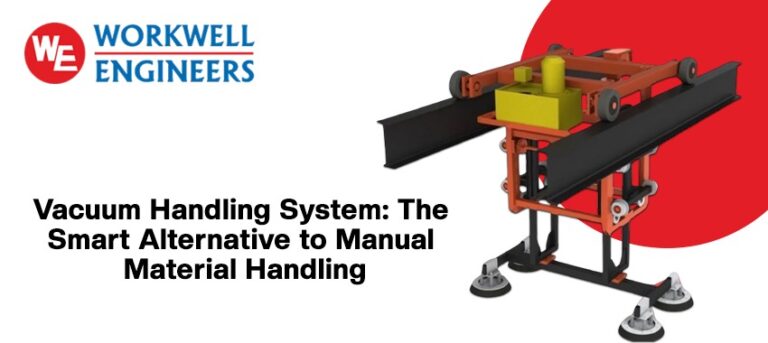
In the current high-stakes and competitive world of manufacturing, speed, safety, and product quality are key factors of success in any business. Although many factories are still heavily dependent on manual labor and physical labor, where workers have to carry, stack, and move heavy goods by hand, this might seem a cost-effective measure initially but can lead to safety and productivity issues.
Well, that’s where a Vacuum Handling System comes into play. Its innovative design enables it to lift and move materials by means of vacuum suction technology.
No matter what natural and artificial materials you are dealing with, the implementation of a Vacuum Handling System will eventually optimize your production and improve overall results.
What Is a Vacuum Handling System?
A Vacuum Handling System is a high-tech material handling system which relies on vacuum suction for lifting, transporting, flipping, and placing heavy goods without damaging them. The system makes use of suction pads for gripping the material, so the operator has to make minimum efforts.
Vacuum handling systems are prevalent in the industries where safe and precise handling of big components, panels, and sheets is of utmost importance.
Issues Related To Manual Material Handling
Manual methods have been prevalent for an extended period but are accompanied by numerous limitations.
Some of the common problems with manual handling include:
– Danger of worker injuries
– Damage to products from unintentional drop
– Scuffs and bruises of the surface
– Slowness of production
– Fatigue of workers
– Variability of handling quality
– Higher labor costs
– Downtime
These factors have a negative impact on productivity, efficiency, and profitability.
Why a Vacuum Handling System Is the Smarter Choice
- Greater Safety of Operation
A major benefit of the Vacuum Handling System is safety. The practice of heavy lifting almost always leads to injuries of the back and other parts of the body. Vacuum lift technology minimizes physical lifting efforts made by operators.
Moreover, the creation of safe working conditions speeds up the process of claims and helps avoid downtime.
- Less Damages to the Products
Some materials like glass, laminates, wood sheets, as well as decorative sheets should be carefully handled.
Vacuum handling systems allow to grip the material firmly without any clamps or hooks eliminating the possibility of:
- Scratches
- Edge chipping
- Cracks
- Dents
- Surface damage
- Work Efficiently with Vacuum Handling System
Manual handling inhibits production because workers need extra time and effort to move heavy material from one location to another.
The Vacuum Handling System gets rid of this problem and enables quicker lifting, moving, loading, unloading, and placing of material for the manufacturers to perform production cycles successfully.
The quicker handling means an increase in productivity and quicker order fulfillment.
- Better Precision
Large industrial sheets have to be placed accurately while being produced. The use of vacuum handling equipment lets the operator put the sheets in place with the accuracy that makes the position of the material line correct.
The need for accuracy is very critical in the lamination and plywood industries.
- Decrease Operating Costs
Though automation requires an initial investment, the vacuum handling system will cut costs in the long run, because it will:
- Help in reducing product damage
- Lower labor costs
- Decrease injuries
- Increase efficiency
- Raise productivity
That will lead to a higher ROI.
Industries Using Vacuum Handling Systems
Vacuum handling systems are common in much manufacturing activity, namely:
- Lamination Manufacturing
- Plywood Industry
- Furniture Manufacturing
- Glass processing
- Metal sheet fabrication
- Stone and marble handling
- Packaging Industry
- Plastic sheet Manufacturing
- Warehouse and logistics operations
- Construction material manufacturing
These industries need safe, efficient material handling.
Vacuum Handling System vs Manual Material Handling
Feature | Vacuum Handling System | Manual Material Handling |
Worker Safety | High | Moderate to Low |
Product Damage | Minimal | Higher Risk |
Handling Speed | Fast | Slow |
Labor Requirement | Low | High |
Precision | Excellent | Depends on Operator |
Productivity | High | Moderate |
Long-Term Cost | Lower | Higher |
The analysis demonstrates why today’s organizations are moving away from manual methods in favor of vacuum technology.
How to Select the Appropriate Vacuum Material Handling System
The following variables must be within the manufacturer’s considerations when choosing a vacuum material handling system:
– Type of material
– Size and mass of the sheets
– Amount of production
– Facility layout
– Lifting height required
– Requirements for automation
– Safety regulations
– Expansion possibilities
Selecting the appropriate vacuum material handling system guarantees optimal efficiency and prolonged operation of a facility.
Why Choose Workwell Engineers?
Workwell Engineers produces vacuum handling systems and designs custom-made systems to suit modern manufacturing operations’ needs. Our design is focused on improving productivity, as well as ensuring safety of workers and minimization of potential product damage.
Whatever kind of materials your enterprise uses, our vacuum handling systems are reliable and precise and reliable over time.
In summary, while automation gains traction in today’s manufacturing operations, manual material handling is becoming less practical and impractical.
A Vacuum Handling System is an innovative technology that enhances safety, minimizes damage to materials, boosts productivity, and cuts down the costs associated with operations. It allows manufacturers to improve their production process while upholding quality standards.
If you want to increase productivity and decrease manual labor requirements in your manufacturing facility, purchasing a new Vacuum Handling System is an excellent decision that guarantees future business growth.
Frequently Asked Questions (FAQs)
- What is a Vacuum Handling System?
A Vacuum Handling System is an industrial lifting technology that operates on the principle of suction, allowing any materials including laminate sheets, glass, wood panels, and metal sheets to be lifted and relocated with little manual interference.
- What are the advantages of using a Vacuum Handling System?
Using a Vacuum Handling System leads to bigger safety levels in the workplace, lower damage to products, enhanced productivity rates, reduced costs for labor, better accuracy of handling, and more efficient manufacturing.
- What industries apply Vacuum Handling Systems in their operations?
Commonly, Vacuum Handling Systems are used in laminate production, plywood industry, furniture manufacturing, glass processing, metal manufacturing and fabrication, packing, logistics, and building supplies manufacturing industries.
- In what ways does a Vacuum Handling System enhance safety in the workplace?
Since it alleviates the need for manual lifting and the handling of heavy materials, a Vacuum Handling System reduces workplace injuries, muscle strain, and operator fatigue caused by excessive manual work.
- How is the Vacuum Handling System superior to manual material handling?
When compared to manual material handling, the Vacuum Handling System has several advantages, such as quicker operation, greater accuracy, less damage to the products, improved safety of the worker, and lower overall costs.