
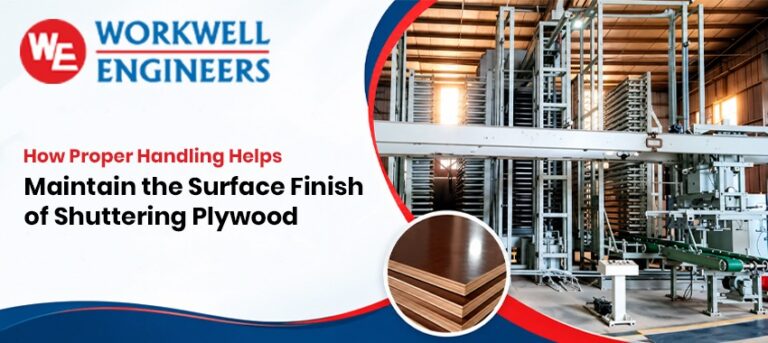
Shuttering plywood is well-known material that has finding its usage for producing concrete formworks as it provides essential characteristics such as durability and stability. The choice of plywood quality is important, however, it is worth mentioning that the way the plywood sheets are moved, safely transported, neatly stacked, and properly stored also plays a crucial role in its condition. If the plywood sheets are already damaged, it can lead to disadvantages concerning aesthetics and usability.
The Shuttering Plywood Handling System will be able to facilitate the handling process for those manufacturers who are working with a large number of sheets. The proper handling technique will allow avoiding unnecessary damage of the plywood during the process of its movement and storage.
Reasons Why Surface Quality is Important in Shuttering Plywood
Shuttering plywood surface is highly important for formwork applications. A good surface ensures better concrete finish and properly finished product free from imperfections.
Nonetheless, the initial surface quality may be compromised when sheets are dragged over coarse surfaces, dropped during transportation, stacked wrongly, or handled multiple times without proper tool. The protection of surface must be implemented in all the stages of production, transportation, and warehousing.
Most Common Reasons for Plywood Surface Damage
Plywood sheets may be damaged inside the facility in numerous ways, for example:
– Dragging sheets across floors/platforms
– Improper way of lifting
– Hitting sheets while transferring them
– Stacking sheets improperly
– Providing unnecessary load on edges of sheets
– Repeated manual work
– Contact with inappropriate surfaces
– Non-systematic storage conditions
All these issues may increase when the company processes great volumes of plywood daily. A properly organized approach to material handling will help minimize damages.
How Proper Handling Protects Plywood Surface Quality
Materials are handled properly if this process is controlled. Plywood sheets should not be dragged or carried manually over a long distance, but special equipment should be used by manufacturers instead.
A Shuttering Plywood Handling System can help eliminate the amount of human effort required in moving sheets. While the system can be customized based on the specific production processes, it can always help with tasks such as transportation, positioning, stacking, and even storing of plywood sheets.
The controlled movement of such systems is very beneficial, especially when moving large sheets. This is essential because it prevents accidental hits and keeps the sheets in the right position.
Importance of Proper Stacking
Proper stacking is also crucial in preserving the quality of plywood. Improper stacking of plywood sheets can damage the edges of the sheets. Removal of the sheets becomes more difficult when they are improperly stacked, requiring additional handling.
With a proper Shuttering Plywood Handling System, it becomes easy to stack sheets properly. As a result, the need for extra moves in carrying the sheets is eliminated.
Manufacturers should take into account several things when planning their stacking process. These include the size of the sheets, weight, amount of sheets to be produced, and the space available for storing sheets.
Reducing Manual Handling and Damage to Materials
Sometimes, work requires manual handling; nevertheless, excessive manual moving leads to the increase in risk of scratches, dents, edge damages, and drops. Also, the workers will become tired when having to move a big sheet of plywood many times over.
To help solve this problem, implementation of the Shuttering Plywood Handling System can reduce the number of lifts and movements. The handling process will improve the efficiency of using sheets and regulate the flow of materials around the site.
The main purpose of this technology is not to replace all work with automatic machines. The right solution will depend on the specified production process and material handling technology.
The Role of Automation in Plywood Handling Improvement
Automation helps to predict and organize the movement of plywood better. The handling system can be used for transferring sheets from one production site to another, for positioning materials, and for placing them for storage purposes.
The Shuttering Plywood Handling System can be customized for various sheet sizes, weights, production volume, and workflow. Thus, it becomes possible to develop the handling process in correspondence with the production process, instead of outlining the universally applicable scheme.
Manufacturers that aim to boost productivity can substantially minimize their downtime through the use of controlled material transport.
Selecting a Plywood Handling System: Essential Considerations
When it comes to choosing the correct handling system, manufacturers should take multiple issues into consideration:
- Dimensions of the plywood sheet
- Weight of each sheet
- Volume of production
- Handling speed requirements
- Stacking type and height
- Available factory space
- Loading and unloading needs
- Level of automation
- Compatibility with installed machinery
- Customization requirements
These factors can provide insight into the most appropriate design of the whole system.
Selection of the Right Handling System
Keeping the quality of shuttering plywood requires actions that go far beyond the manufacturing process. Careful lifting and transportation, precise positioning, stacking, and storing practices are all vital for successful protection of the material.
With years of experience in the field of industrial handling, Workwell Engineers specializes in finding solutions for the transportation and storing of shuttering plywood. The focus of its engineering practices is on the customization of handling systems based on the particular requirements of industries.
An efficient Shuttering Plywood Handling System benefits manufacturers in the reduction of excessive manual labor and enhancement of material flow, stacking in a proper order, and minimizing unnecessary surface as well as edge damage.
With the intention of increasing productivity and protecting material, the plywood manufacturers should think about investing in the proper Shuttering Plywood Handling System for more systematic production processes.